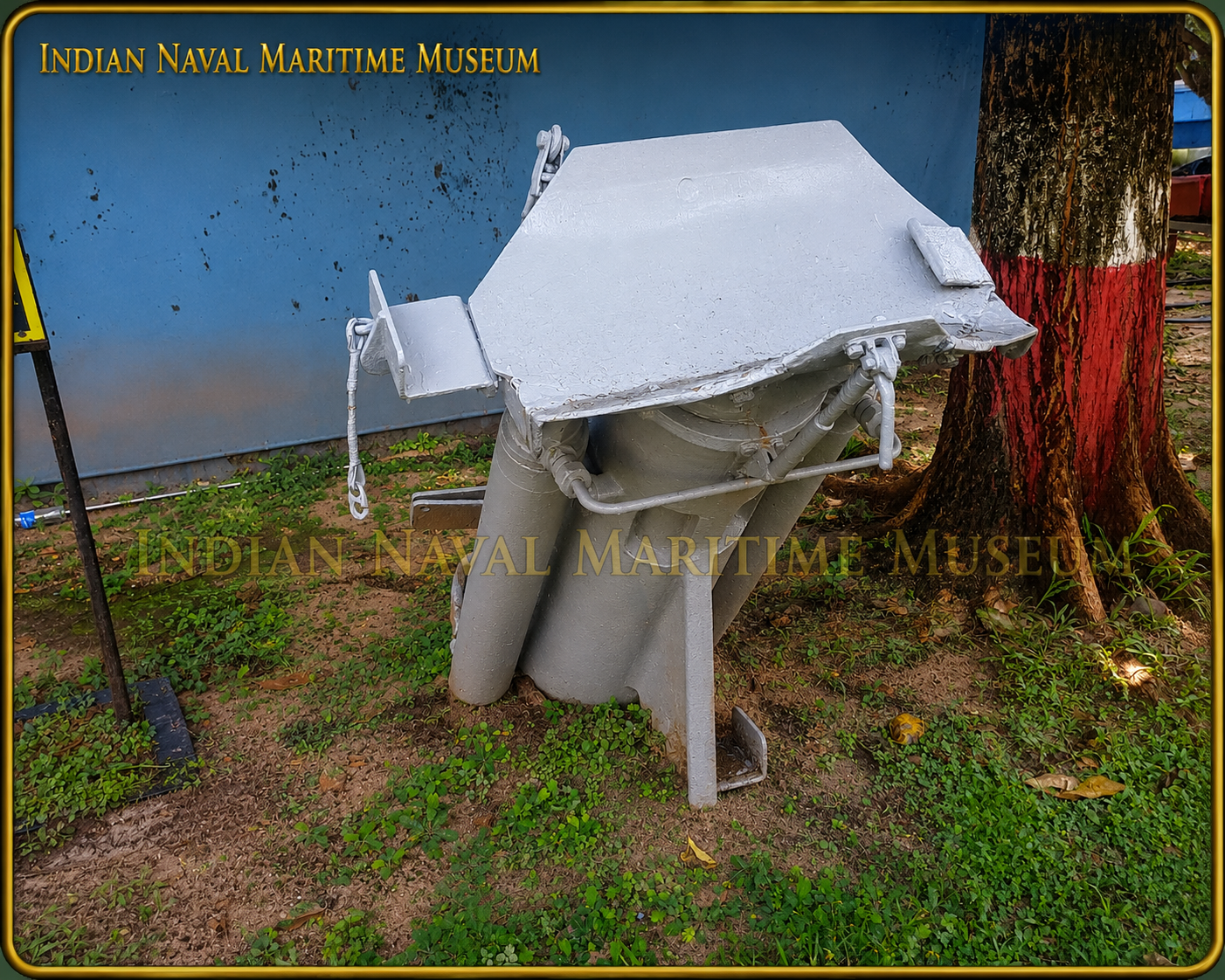
DC MK-11 – Anti-Submarine Depth Charge
Audio Guide
Listen to artifact story
Audio guide ready
The DC MK-11 (Depth Charge Mark-11) is an anti-submarine weapon used by the Indian Navy to detect and destroy enemy submarines operating underwater.
Key Features
Designed specifically for anti-submarine warfare (ASW).
Can be deployed from:
Sea King helicopters
Chetak helicopters
Naval ships
Dropped at the estimated location of an enemy submarine.
Sinks underwater and detonates at a predetermined depth.
The powerful underwater explosion creates a shock wave capable of damaging or destroying submarines.
How It Works
Enemy submarine position is estimated using sonar and other detection systems.
The DC MK-11 is released from a helicopter or ship.
It descends through the water to the selected depth.
The charge explodes underwater, producing a powerful pressure wave.
The shock wave can damage the submarine's hull, equipment, and crew.
Operational Role
Coastal and fleet defense.
Protection of naval task forces.
Anti-submarine patrol missions.
Maritime security operations.
Historical Importance
Before the widespread use of modern lightweight torpedoes, depth charges like the DC MK-11 were among the primary anti-submarine weapons used by navies around the world. They remain an important part of naval warfare history and anti-submarine operations.
Museum Display Summary
The exhibit showcases the DC MK-11, a lethal anti-submarine depth charge used by the Indian Navy. It could be deployed from ships, Sea King helicopters, and Chetak helicopters against suspected submarine positions, making it a vital weapon in underwater warfare.
Key Features
Designed specifically for anti-submarine warfare (ASW).
Can be deployed from:
Sea King helicopters
Chetak helicopters
Naval ships
Dropped at the estimated location of an enemy submarine.
Sinks underwater and detonates at a predetermined depth.
The powerful underwater explosion creates a shock wave capable of damaging or destroying submarines.
How It Works
Enemy submarine position is estimated using sonar and other detection systems.
The DC MK-11 is released from a helicopter or ship.
It descends through the water to the selected depth.
The charge explodes underwater, producing a powerful pressure wave.
The shock wave can damage the submarine's hull, equipment, and crew.
Operational Role
Coastal and fleet defense.
Protection of naval task forces.
Anti-submarine patrol missions.
Maritime security operations.
Historical Importance
Before the widespread use of modern lightweight torpedoes, depth charges like the DC MK-11 were among the primary anti-submarine weapons used by navies around the world. They remain an important part of naval warfare history and anti-submarine operations.
Museum Display Summary
The exhibit showcases the DC MK-11, a lethal anti-submarine depth charge used by the Indian Navy. It could be deployed from ships, Sea King helicopters, and Chetak helicopters against suspected submarine positions, making it a vital weapon in underwater warfare.