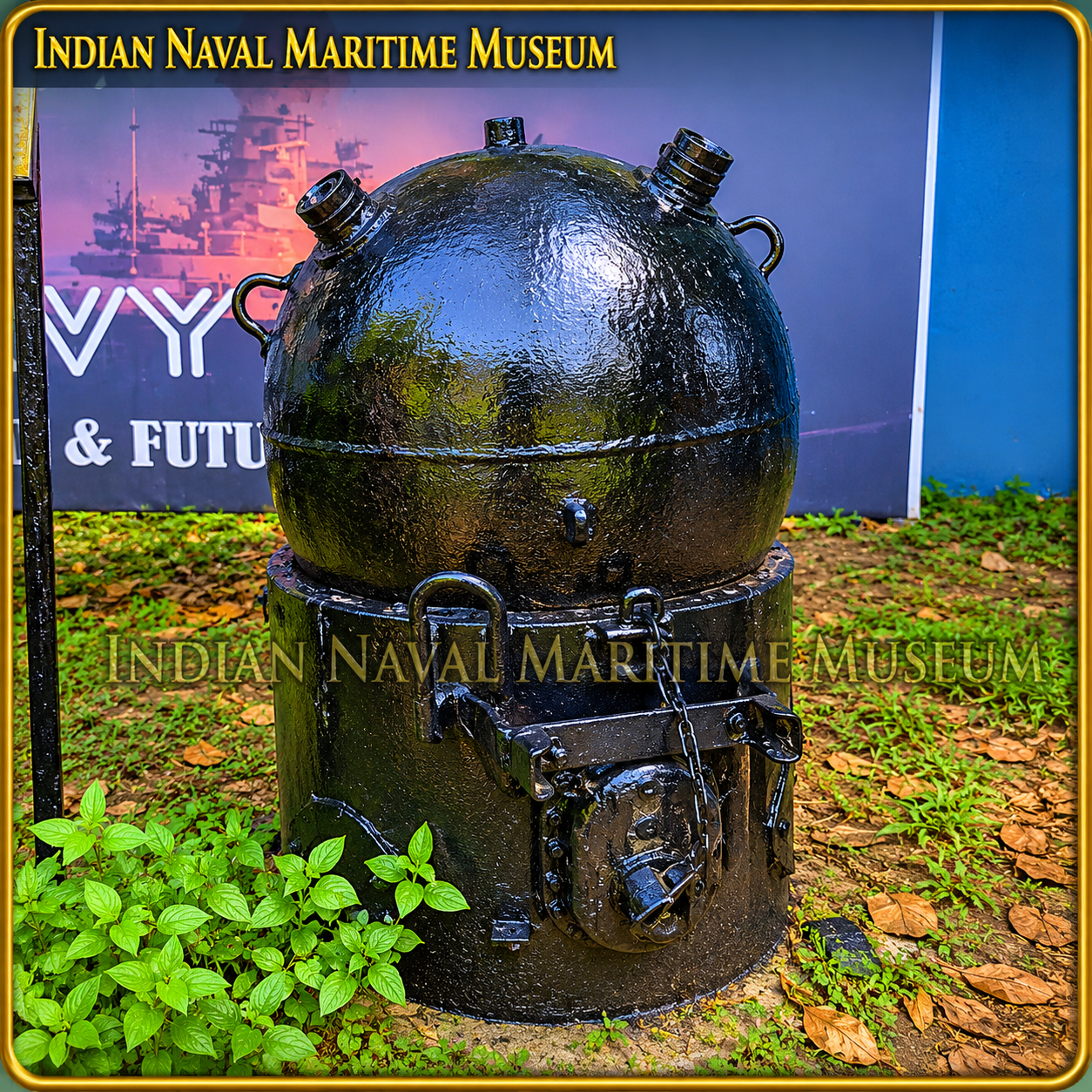
Depth Charges
Audio Guide
Listen to artifact story
Audio guide ready
Depth Charges
The information board describes Depth Charges, a classic anti-submarine warfare (ASW) weapon used by naval forces to detect and destroy enemy submarines beneath the sea.
What is a Depth Charge?
A Depth Charge is an explosive weapon designed to attack submarines underwater. Instead of hitting a target directly, it is dropped into the water and explodes at a predetermined depth, creating a powerful underwater shock wave.
How It Works
A submarine's position is estimated using sonar or other detection systems.
The depth charge is released into the water.
It sinks to a preset depth.
The fuse triggers an explosion.
The resulting hydraulic shock wave travels through the water and can damage or destroy nearby submarines.
Main Components
High explosive filling – Creates a powerful underwater blast.
Depth fuse mechanism – Controls the depth at which the weapon detonates.
Metal casing – Contains and protects the explosive charge.
Deployment Platforms
Depth charges can be launched or dropped from:
Naval ships
Patrol aircraft
Helicopters
Purpose
Anti-submarine warfare (ASW)
Protection of naval fleets and shipping routes
Coastal and maritime defense operations
Effectiveness
Water transmits shock waves extremely efficiently. Even if a depth charge does not directly hit a submarine, the explosion can:
Damage the submarine hull
Disable equipment and machinery
Cause flooding
Force the submarine to surface
Historical Significance
Depth charges became one of the most important anti-submarine weapons during the 20th century and were extensively used in both World Wars. Before the widespread use of guided torpedoes, they were the primary method of attacking submerged submarines.
Museum Exhibit Summary
This exhibit explains the operation of Depth Charges, an anti-submarine weapon that destroys submarines by detonating underwater at a selected depth. These weapons could be deployed from ships, patrol aircraft, and helicopters, making them a key component of naval anti-submarine warfare.
The information board describes Depth Charges, a classic anti-submarine warfare (ASW) weapon used by naval forces to detect and destroy enemy submarines beneath the sea.
What is a Depth Charge?
A Depth Charge is an explosive weapon designed to attack submarines underwater. Instead of hitting a target directly, it is dropped into the water and explodes at a predetermined depth, creating a powerful underwater shock wave.
How It Works
A submarine's position is estimated using sonar or other detection systems.
The depth charge is released into the water.
It sinks to a preset depth.
The fuse triggers an explosion.
The resulting hydraulic shock wave travels through the water and can damage or destroy nearby submarines.
Main Components
High explosive filling – Creates a powerful underwater blast.
Depth fuse mechanism – Controls the depth at which the weapon detonates.
Metal casing – Contains and protects the explosive charge.
Deployment Platforms
Depth charges can be launched or dropped from:
Naval ships
Patrol aircraft
Helicopters
Purpose
Anti-submarine warfare (ASW)
Protection of naval fleets and shipping routes
Coastal and maritime defense operations
Effectiveness
Water transmits shock waves extremely efficiently. Even if a depth charge does not directly hit a submarine, the explosion can:
Damage the submarine hull
Disable equipment and machinery
Cause flooding
Force the submarine to surface
Historical Significance
Depth charges became one of the most important anti-submarine weapons during the 20th century and were extensively used in both World Wars. Before the widespread use of guided torpedoes, they were the primary method of attacking submerged submarines.
Museum Exhibit Summary
This exhibit explains the operation of Depth Charges, an anti-submarine weapon that destroys submarines by detonating underwater at a selected depth. These weapons could be deployed from ships, patrol aircraft, and helicopters, making them a key component of naval anti-submarine warfare.