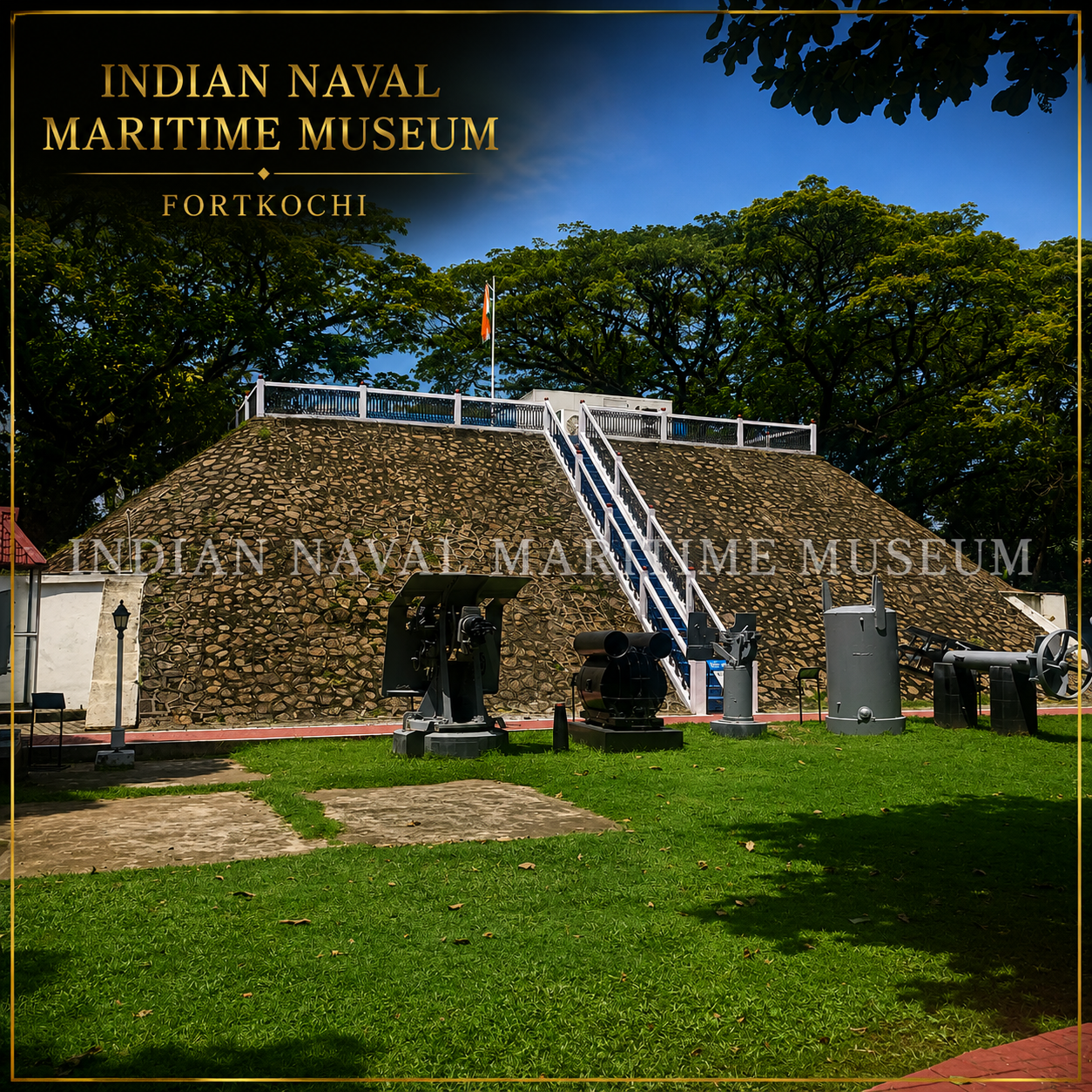
World War II Bunkers
Audio Guide
Listen to artifact story
Audio guide ready
World War II Bunkers
The World War II Bunkers at the Indian Naval Maritime Museum were built by the British before World War II as a defensive measure against a possible Japanese invasion. A bunker is a fortified military structure designed to protect people, weapons, and valuable materials from bombs, artillery fire, and enemy attacks.
During the war, the Japanese forces advanced as far as Burma (present-day Myanmar), creating a serious threat to British-controlled territories in the region. Anticipating this danger, the British constructed these bunkers along strategic coastal areas to safeguard military installations and personnel.
Although the Japanese forces never reached this location, the bunkers remained intact and survived the war. Today, they serve as important historical structures, highlighting the military preparedness and coastal defense strategies employed during World War II.
Key Facts
Built by the British before World War II.
Designed to protect against air raids, artillery attacks, and enemy invasions.
Constructed due to fears of a Japanese advance toward India.
Part of a larger coastal defense system.
Remained unused in combat but survived intact.
Preserved today as a historical reminder of World War II defense preparations.
The World War II Bunkers at the Indian Naval Maritime Museum were built by the British before World War II as a defensive measure against a possible Japanese invasion. A bunker is a fortified military structure designed to protect people, weapons, and valuable materials from bombs, artillery fire, and enemy attacks.
During the war, the Japanese forces advanced as far as Burma (present-day Myanmar), creating a serious threat to British-controlled territories in the region. Anticipating this danger, the British constructed these bunkers along strategic coastal areas to safeguard military installations and personnel.
Although the Japanese forces never reached this location, the bunkers remained intact and survived the war. Today, they serve as important historical structures, highlighting the military preparedness and coastal defense strategies employed during World War II.
Key Facts
Built by the British before World War II.
Designed to protect against air raids, artillery attacks, and enemy invasions.
Constructed due to fears of a Japanese advance toward India.
Part of a larger coastal defense system.
Remained unused in combat but survived intact.
Preserved today as a historical reminder of World War II defense preparations.